Public Transit Train Icons: A Designer’s Guide to Avoiding Common Mistakes
Understanding Public Transit Train Icons
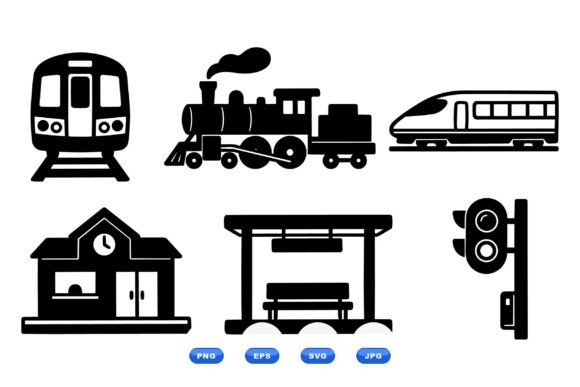
Public Transit Train Icons is a flat design vector icon set that visually represents various train types and station elements. It’s ideal for branding, web design, and transport mapping. The set features bold silhouettes and vibrant styles, all built with clean black-and-white vectors and sharp contours. These icons are fully scalable, making them suitable for both print and digital workflows. The downloadable ZIP package includes SVG, EPS, PNG, and JPG formats—offering flexibility for a wide range of design needs.
Whether you're designing a transit app, city map, or branding material, these icons provide a professional and consistent visual language. Their scalability ensures clarity at any size, and the variety of included elements helps maintain design coherence across platforms.
1. Overlooking Format Compatibility
One of the most common oversights is not checking which file formats are supported by your software or platform. While SVG and EPS are ideal for scalable vector graphics, PNG and JPG are better suited for web use where vector support is limited.
Why it matters: Using the wrong format can lead to pixelation, increased file size, or compatibility issues that slow down your workflow.
Better approach: Always verify your design tools' format support before downloading. Use SVG for web and print scalability, and PNG for transparent backgrounds on websites.
2. Ignoring License Terms
Many users assume that because the icons are downloadable, they’re free for any use. However, depending on the source, there may be licensing restrictions for commercial use, redistribution, or modification.
Why it matters: Using icons without the proper license can lead to legal issues, especially for businesses or commercial projects.
Better approach: Read the license agreement carefully. If you're using the icons for a client or product, ensure the license allows for commercial use and redistribution if needed.
3. Using Too Many Icon Variations
The icon set includes multiple train types and station elements, which can be tempting to use all at once. But overusing variations can clutter your design and confuse your audience.
Why it matters: Visual inconsistency reduces clarity and can make your design appear unprofessional or amateurish.
Better approach: Stick to a cohesive subset of icons that align with your project’s purpose. For example, use only metro and suburban train icons for a city transit map to maintain clarity and visual harmony.
4. Neglecting Scalability in Print Projects
While the icons are fully scalable, some users still download low-resolution versions (like JPGs) for large-format print, leading to blurry or pixelated output.
Why it matters: Poor print quality diminishes professionalism and can reflect poorly on your brand or publication.
Better approach: Always use SVG or EPS files for print work to ensure sharp, clean lines at any size. If your printer doesn’t support vector files, request high-resolution PDF exports from your design software.
5. Failing to Match Design Style
The bold silhouette and flat design style of Public Transit Train Icons makes them ideal for modern, minimalist visuals. However, they may not blend well with more detailed or realistic design aesthetics.
Why it matters: Mixing incompatible design styles can make your project look disjointed or unpolished.
Better approach: Evaluate your existing design system before integrating the icons. If you’re working with a skeuomorphic or highly detailed style, consider modifying the icons or selecting a different set that complements your visuals.
6. Not Testing Icons Across Devices
Icons that look sharp on a desktop screen may appear too small or unclear on mobile devices, especially when scaled down.
Why it matters: Poor visibility on mobile affects user experience and can reduce the effectiveness of your design.
Better approach: Test your icons on multiple screen sizes and resolutions. If needed, simplify the design or adjust line weights to ensure clarity at smaller sizes.
What to Check Before Downloading or Using the Icons
Before you commit to using Public Transit Train Icons, consider the following factors to ensure they’re the right fit for your project:
- Project type: Are you designing for print, web, or mobile? Choose the appropriate formats accordingly.
- Design system compatibility: Do the icons align with your brand’s visual style? Test them in a mockup before full implementation.
- License scope: Are you allowed to modify, redistribute, or use the icons commercially?
- Icon coverage: Does the set include all the train types and station elements you need?
- Technical support: Is there documentation or support available if you run into issues?
Maximizing Value and Efficiency
Using Public Transit Train Icons effectively means more than just downloading and placing them on a page. It requires thoughtful integration, technical awareness, and attention to visual consistency.
Consider creating a style guide or icon usage document if you're working in a team or across multiple platforms. This ensures everyone uses the icons correctly and consistently, avoiding confusion and wasted time.
Also, don’t hesitate to reach out to the creator or vendor if you have questions about usage, customization, or licensing. Proactively addressing concerns before a project begins can prevent costly revisions later.
Final Thoughts
Public Transit Train Icons offer a powerful toolkit for designers working in transport, urban planning, branding, and digital interfaces. Their clean, scalable design makes them versatile and professional. But like any design asset, they require careful selection, implementation, and evaluation to deliver the best results.
By avoiding common mistakes—like format mismatches, license misunderstandings, and design inconsistencies—you can ensure your project looks polished, functions well, and communicates clearly. Take the time to evaluate your needs and test the icons before full deployment, and you’ll be rewarded with a smoother workflow and more impactful visuals.