Choosing the Right Set of Isometric Icons Representing Dive for Your Design Projects
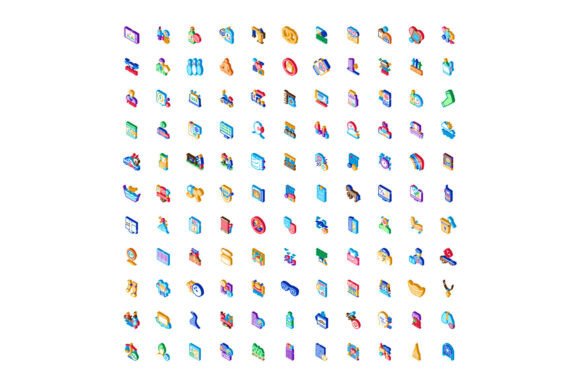
Designers and creators across industries are increasingly turning to isometric icons to enhance visual storytelling, especially when representing complex concepts like diving, business, technology, and lifestyle. A Set of Isometric Icons Representing Dive offers a modern, scalable, and visually appealing way to communicate underwater themes, movement, and exploration. Whether you're building a website, designing an infographic, or crafting a presentation, these icons can elevate your content and improve user engagement.
Why Isometric Icons Matter in Modern Design
Isometric design has become a go-to style for UI and UX professionals due to its ability to represent three-dimensional space in a two-dimensional layout. When applied to a concept like diving, isometric icons help users quickly grasp ideas such as depth, immersion, and navigation. These icons are especially useful in web design, mobile apps, and data visualizations where clarity and aesthetics are equally important.
Common Mistakes When Selecting or Using Dive-Themed Isometric Icons
While isometric icons offer many benefits, they can also lead to design missteps if not chosen or implemented thoughtfully. Here are some common issues and how to avoid them:
1. Overlooking Consistency in Style and Perspective
One of the most frequent errors is mixing isometric icons from different sets that don't share the same visual language. Icons with mismatched line weights, shading, or perspective angles can make a design look disjointed and unprofessional.
Better approach: Choose a Set of Isometric Icons Representing Dive that includes all the icons you need in a unified style. Look for sets that offer matching icons for business, technology, and lifestyle concepts if you're using them across multiple contexts.
2. Ignoring Scalability and Resolution
Some designers download low-resolution or non-vector icon sets, which can cause pixelation when scaled up for larger screens or print media. This issue is especially noticeable in isometric designs, where fine details matter.
Better approach: Always opt for vector-based formats like SVG. They maintain clarity at any size and are ideal for responsive web design. Confirm that the dive-themed set you choose includes scalable assets.
3. Failing to Consider Context and Audience
Not all isometric icons are appropriate for every project. For example, a playful, cartoonish icon set may not suit a corporate or technical application. Similarly, overly complex icons can confuse users instead of clarifying meaning.
Better approach: Evaluate the tone and audience of your project. A Set of Isometric Icons Representing Dive designed for a scuba gear retailer might lean toward realism, while one used in an educational app could benefit from simplified, symbolic visuals.
4. Underestimating Licensing Restrictions
Many free or low-cost icon sets come with usage limitations that designers overlook until it's too late. This can lead to legal issues or the need to replace icons mid-project.
Better approach: Always review the licensing terms before downloading. If you're using icons for commercial work, choose a set with a clear commercial-use license or purchase a premium version to avoid complications.
What to Check Before Downloading or Buying an Icon Set
Before committing to a Set of Isometric Icons Representing Dive, verify the following elements to ensure a smooth and effective design process:
- Compatibility: Does the set work well with your design tools (Figma, Sketch, Adobe Illustrator, etc.)?
- Customization: Can you easily adjust colors, stroke widths, or perspective to match your brand guidelines?
- Completeness: Does the set include related icons for technology, business, or lifestyle if needed for your project?
- Updates and Support: Is the provider known for offering updates or customer support if issues arise?
How to Use Dive-Themed Isometric Icons Effectively
Once you've selected the right set, applying it effectively is key to maximizing its impact. Here are some practical tips:
- Pair with flat or minimal design elements to maintain visual harmony and avoid clutter.
- Use a consistent color palette across all icons to reinforce brand identity and readability.
- Group icons logically in infographics or dashboards to guide the viewer’s eye and improve comprehension.
- Optimize for performance by compressing SVG files or using icon fonts when appropriate, especially for web use.
Real-World Example: Improving a Travel App Interface
Imagine a travel app that features underwater exploration tours. Initially, the team used generic flat icons to represent diving activities. Users found the interface unclear and struggled to differentiate between snorkeling, scuba diving, and deep-sea tours.
The team switched to a curated Set of Isometric Icons Representing Dive that clearly illustrated each activity with depth and detail. The result was a more intuitive UI that improved user engagement and reduced support requests related to activity selection.
Final Thoughts: Choose Wisely, Design Confidently
Isometric icons, especially those representing dynamic concepts like diving, are powerful tools when used correctly. By avoiding common mistakes—like style mismatches, scalability issues, and licensing oversights—you can ensure your designs remain professional, efficient, and visually compelling.
Take the time to explore different Set of Isometric Icons Representing Dive options, read reviews, and test samples before committing. Your attention to detail will pay off in cleaner layouts, better user experiences, and stronger visual communication across your projects.